






Catalogues & Brochures

Download Corporate Brochure
Download Product Catalogue
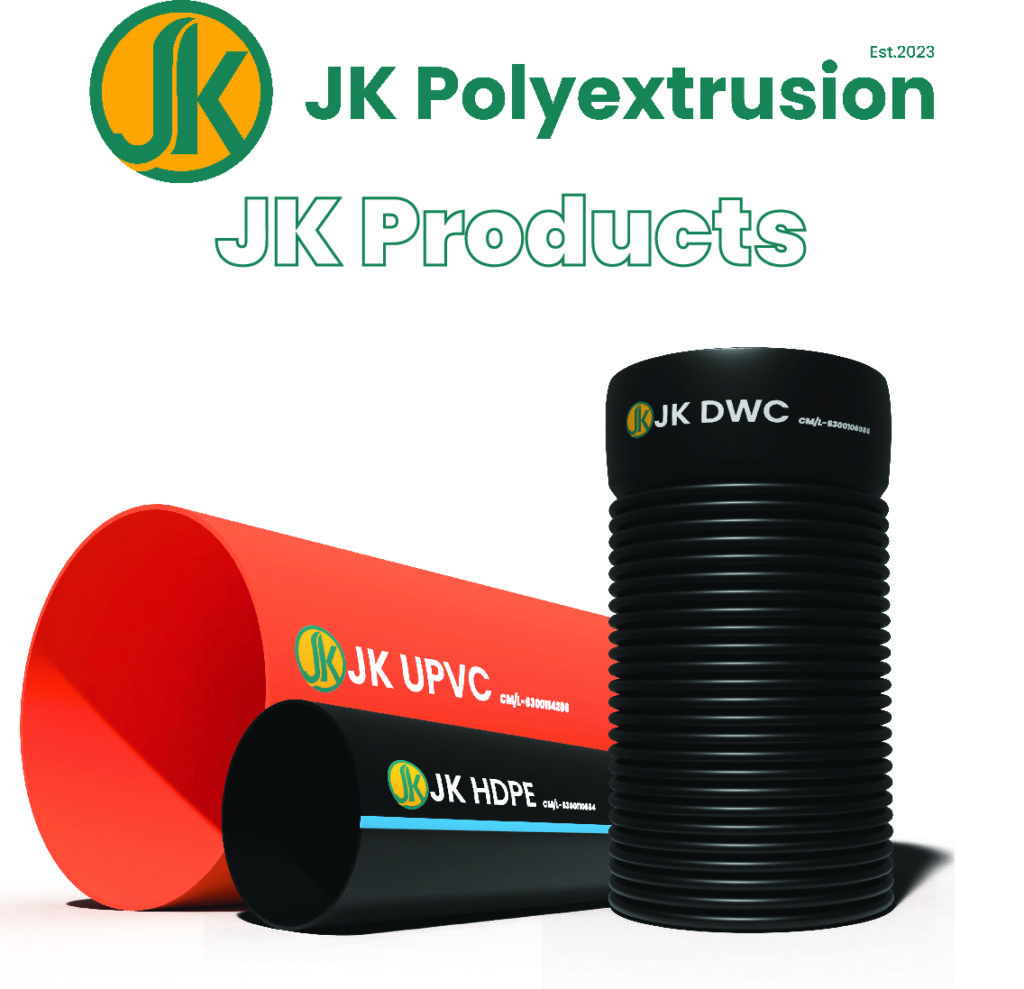
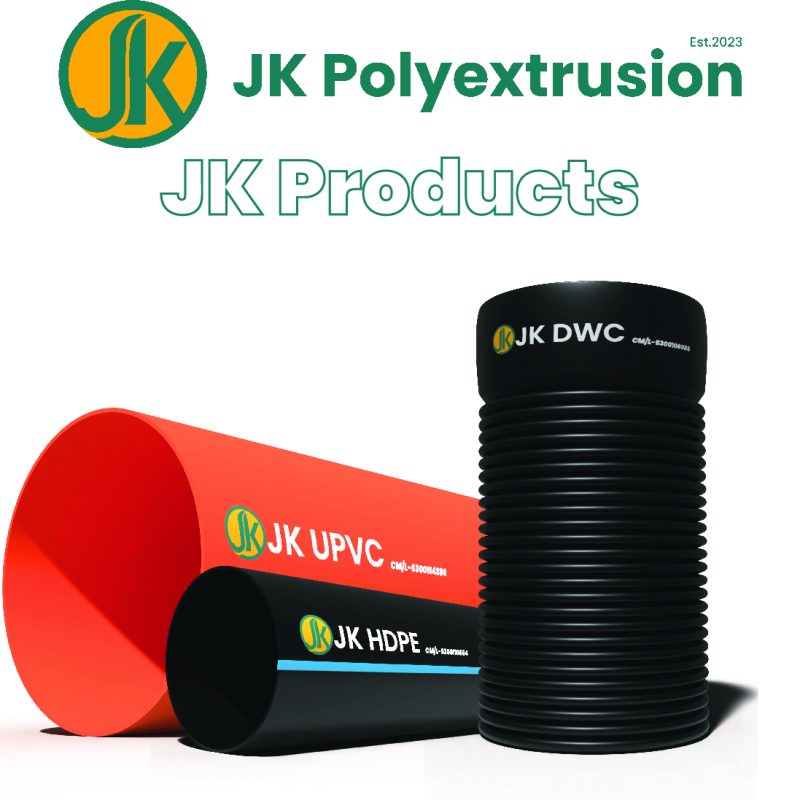
JK-DWC
JK-HDPE
JK-UPVC
Download JK- UPVC Brochure
Previous slide
Next slide
Manufacturing Process & Quality Checks
1.Raw Material Selection and Preparation
• The process begins with the careful selection of high-grade raw materials such as polyethylene for HDPE pipes and polyvinyl chloride (PVC) for UPVC pipes.
• These materials are sourced from certified suppliers to ensure purity, quality, and compliance with industry standards to customers.
• The raw materials are then mixed with necessary additives to enhance properties like strength, flexibility, UV resistance, and durability.
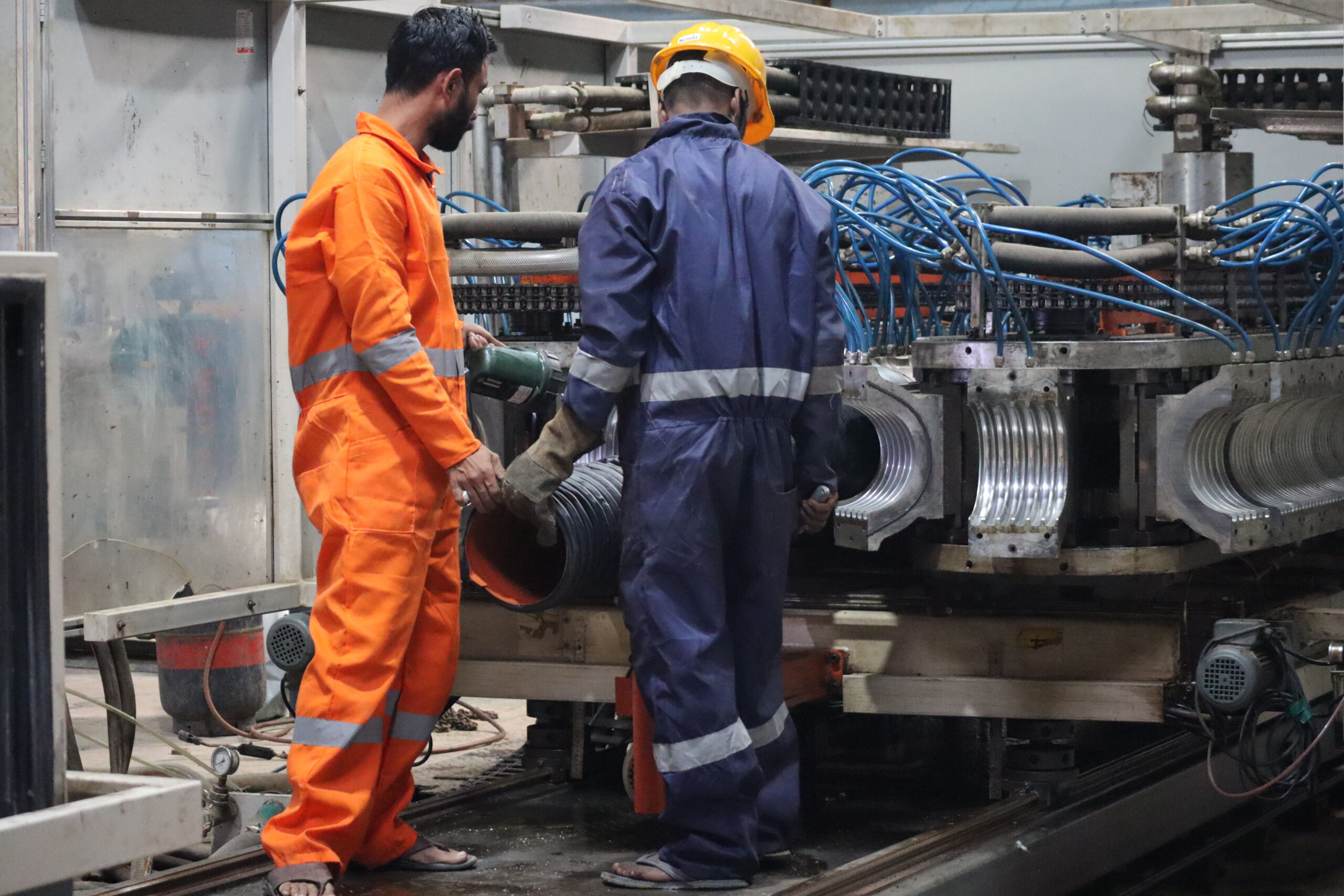
- The extrusion process is the core of pipe manufacturing. The prepared raw material is fed into an extruder, where it is melted at controlled temperatures to achieve a uniform consistency.
• For UPVC and HDPE pipes, the material passes through a specialized die to form the required pipe shape and size.
• For DWC pipes, a dual extrusion process is used to create the double-wall structure, which consists of a smooth inner layer and a corrugated outer layer for added strength and flexibility.
• After extrusion, the hot pipes are passed through a calibration sleeve to achieve precise dimensions and shape.
• The pipes are then transferred through a cooling system, typically involving water baths or spray cooling, to solidify and retain their structure.
• This rapid cooling ensures dimensional stability and prevents deformities, resulting in strong, durable pipes.
• Once cooled, the pipes are marked with essential details like brand name, pipe size, pressure rating, manufacturing date.
• This ensures traceability and helps customers easily identify the product specifications during installation and inspection.
• The pipes are cut to the desired lengths using high-precision cutters.
• Finishing processes are applied to smooth any rough edges and prepare the pipes for easy installation.
• Each pipe is inspected to confirm that it meets the required length, thickness, and quality standards.
• At JK Polyextrusion, quality control is a critical step. Each batch of pipes undergoes rigorous testing to ensure compliance with ISO, ISI, and other relevant standards.
Testing procedures include:
• Pressure Testing: To verify the pipe’s ability to withstand high pressures.
• Impact Resistance Testing: To ensure pipes can endure physical stress without cracking.
• Chemical Resistance Testing: Particularly for HDPE and UPVC pipes, ensuring durability in
corrosive environments.
• Dimensional and Visual Inspection: Confirming pipes meet exact specifications and have no visible defects.
• Pressure Testing: To verify the pipe’s ability to withstand high pressures.
• Impact Resistance Testing: To ensure pipes can endure physical stress without cracking.
• Chemical Resistance Testing: Particularly for HDPE and UPVC pipes, ensuring durability in
corrosive environments.
• Dimensional and Visual Inspection: Confirming pipes meet exact specifications and have no visible defects.
• Once the pipes have passed quality control checks, they are securely packaged to prevent any damage during transportation.
• Pipes are bundled or coiled (in the case of smaller diameters) and labeled according to size and type, ready for distribution.
• JK Polyextrusion ensures efficient logistics, delivering products to clients promptly and in
optimal condition.
• Throughout the manufacturing process, JK Polyextrusion adheres to environmentally responsible practices by reducing waste, optimizing energy use, and recycling materials
whenever possible.
• We prioritize sustainability to deliver high-quality pipes that not only meet industry demands but also align with our environmental commitments.
Our Clients

JKPolyextrusion, your trusted manufacturer of premium plastic piping solutions, including UPVC, HDPE, and DWC pipes. Established in 2023, we are dedicated to providing high-quality, durable, and eco-friendly piping systems that meet the unique needs of industries worldwide. JK Polyextrusion is proud to set the benchmark for excellence in the piping industry.